Updated August 9, 2026: We refreshed planning links and kept future-event language conservative. Check the Sanibel Community House and Shell Club before making plans around next year's exact dates.
We spent the afternoon at the 88th Annual Sanibel Shell Show this week — and if you missed it, we're sorry. But also: start planning for next March, because this is one of those Sanibel experiences you don't skip twice.
The Shell Show has been running since 1937. That makes it one of the longest-running shell shows in the entire country. It's held every year at the Sanibel Community House on Periwinkle Way, and it draws collectors, scientists, and shell enthusiasts from around the world.
Here's what we saw — and everything you need to know for next year.
What Is the Sanibel Shell Show?
The Shell Show is a juried exhibition and competition organized by the Sanibel-Captiva Shell Club. Think of it as the art gallery of the ocean floor. Exhibitors display their personal collections — sometimes decades in the making — arranged in glass cases with hand-written labels, educational panels, and award ribbons.
There are two main categories:
- Scientific exhibits — Shells organized by species, with taxonomic labels, range maps, and photographs of the living animals. These are the ones that make you realize a shell isn't just a pretty thing you picked up at the beach — it was someone's home.
- Shell art — Mosaics, sculptures, shadow boxes, and decorative pieces made entirely from shells. Some of these take months to create. The craftsmanship is genuinely stunning.
Judges award blue ribbons (1st place), red ribbons (2nd), and white ribbons (3rd) across multiple categories. The competition is serious — exhibitors fly in from across the country.
What We Saw This Year
Spindle Shells — Elegance in Glass
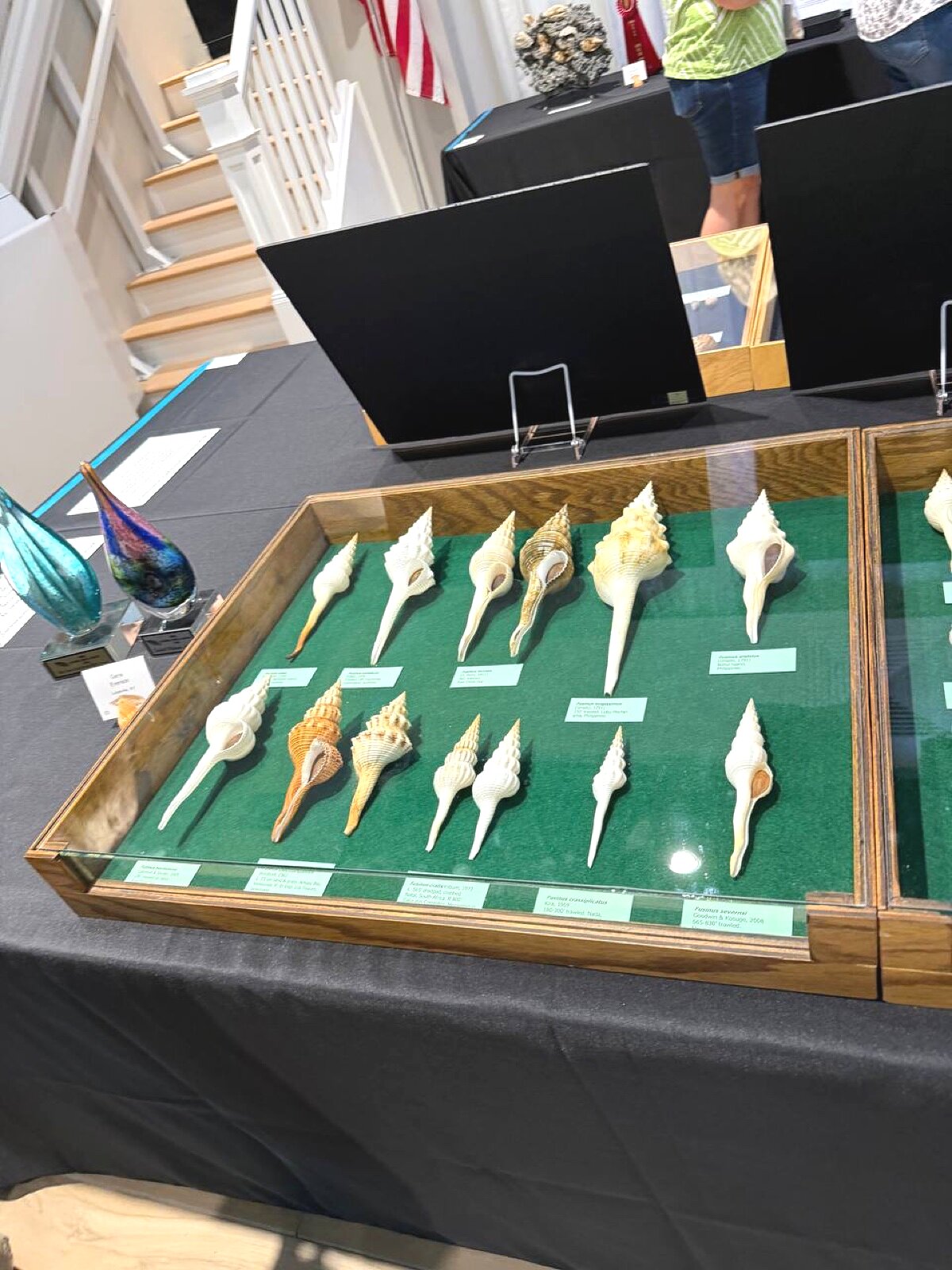
One of the first displays that stopped us in our tracks: a collection of Fusinus spindle shells arranged on green velvet under glass. Ivory white, pale amber, intricate spiral ridges — each one more delicate than the last. The kind of thing that makes you realize shells are nature's sculpture.
Award-Winning Collections
The competition is fierce. Exhibitors arrange their collections by species, by region, by color — whatever tells the best story. Judges award blue ribbons (1st), red ribbons (2nd), and white ribbons (3rd) across multiple categories.
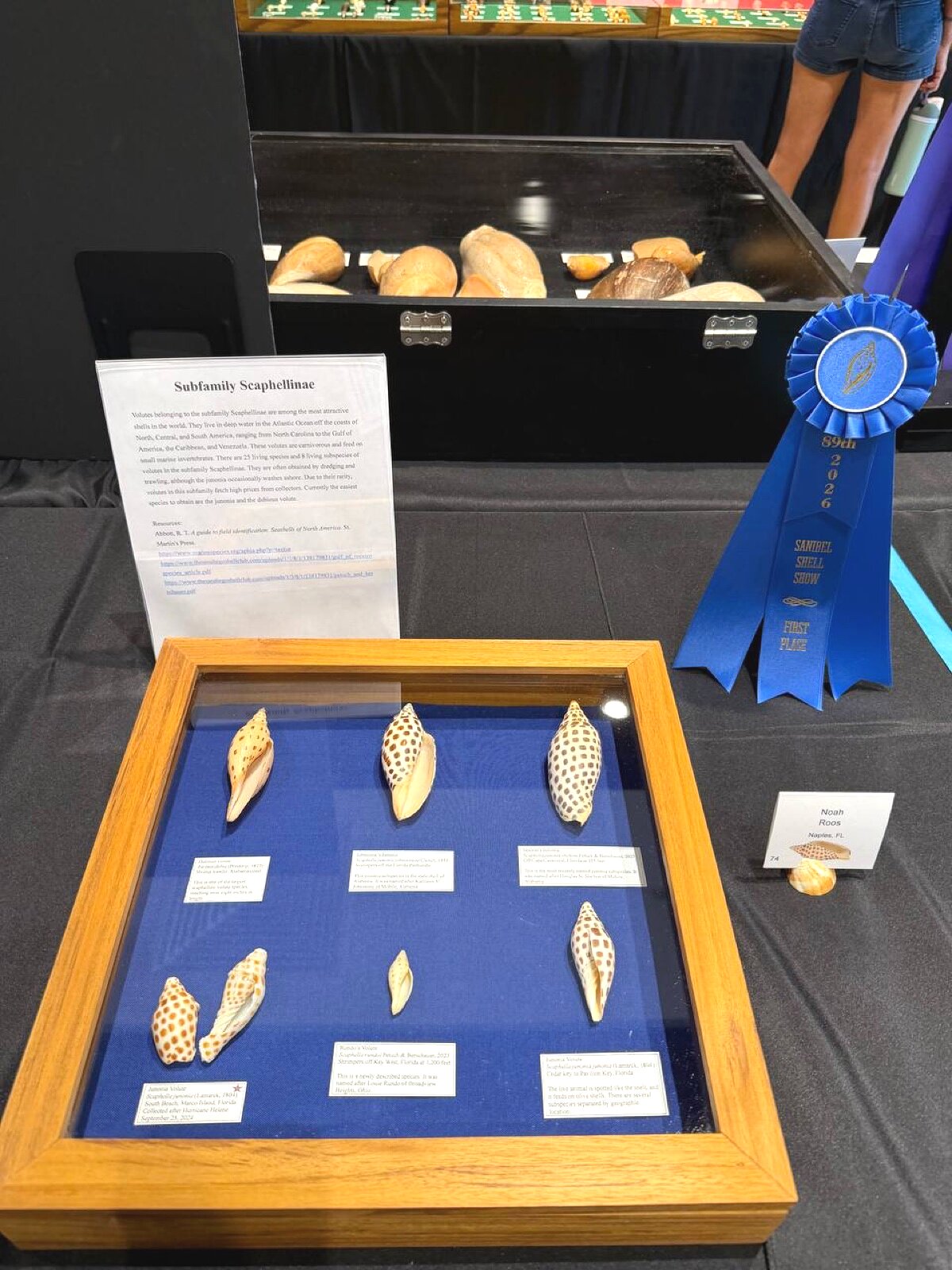
This year's first-place scientific exhibit went to Noah Roos from Naples, FL — a collection of Subfamily Scaphellinae volutes displayed on navy blue velvet. These deep-water shells are among the most attractive in the world, ranging from North Carolina to Venezuela. The spotted patterns and elegant elongated forms were mesmerizing.
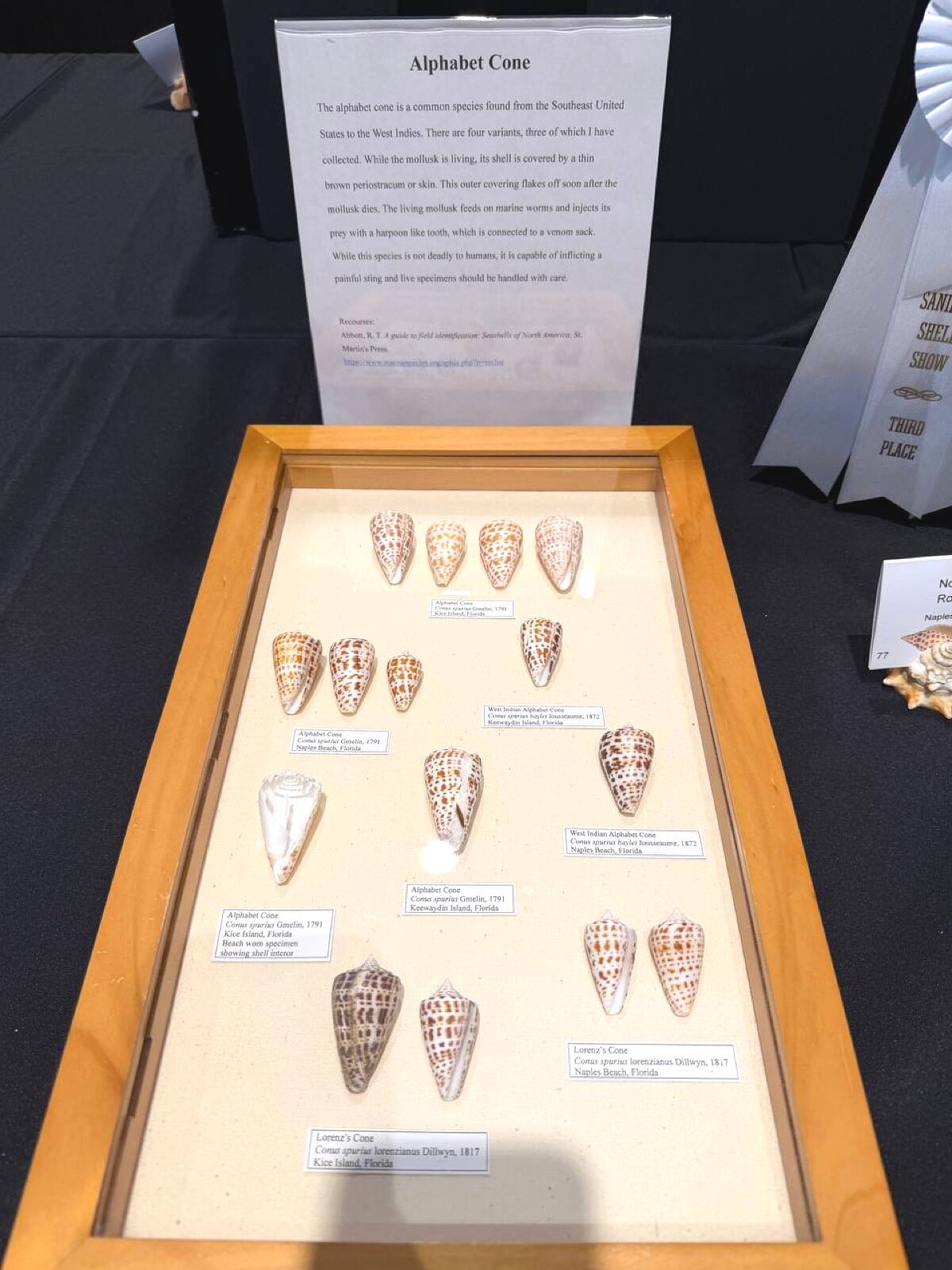
Another standout: the Alphabet Cone exhibit — dozens of Conus spurius specimens from Naples Beach and Kice Island, arranged by variant. Every shell is different, like fingerprints.
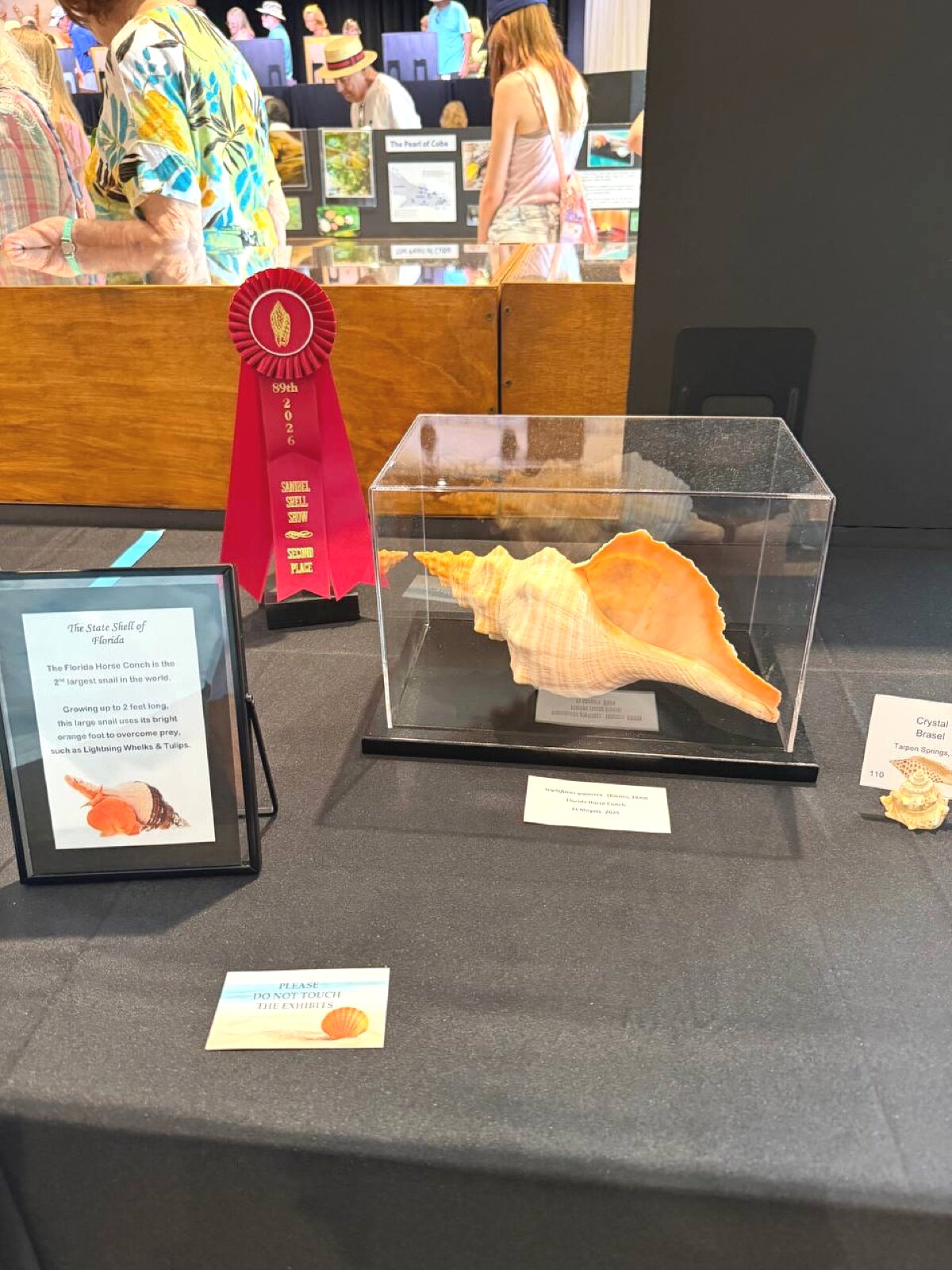
And a crowd favorite: the Florida Horse Conch — Florida's state shell and the second-largest snail in the world, growing up to two feet long. This specimen earned a second-place ribbon and came with an educational panel explaining how the animal uses its bright orange foot to hunt Lightning Whelks and Tulips.
Triton's Trumpets — The Big Ones
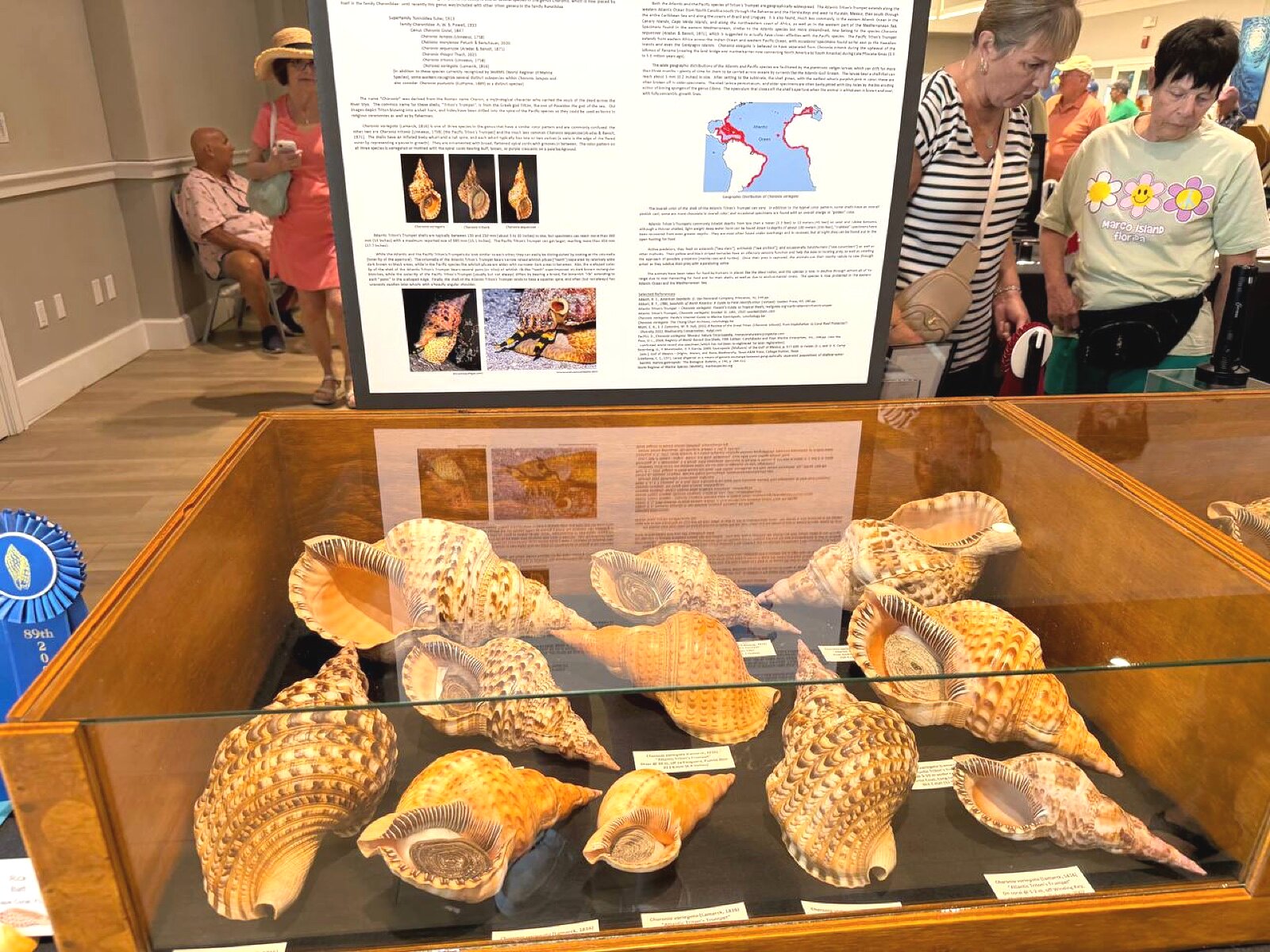
For sheer drama, nothing beat the Charonia triton trumpet exhibit. These are big shells — some nearly a foot long — displayed alongside a detailed research panel covering their Atlantic and Pacific distribution, feeding habits, and the mythology behind their name (Charonia was a Greek god who carried the dead across the River Styx in a boat shaped like a shell).
Educational Exhibits That Surprise You
This is what sets the Shell Show apart from a craft fair. Exhibitors don't just display shells — they teach.
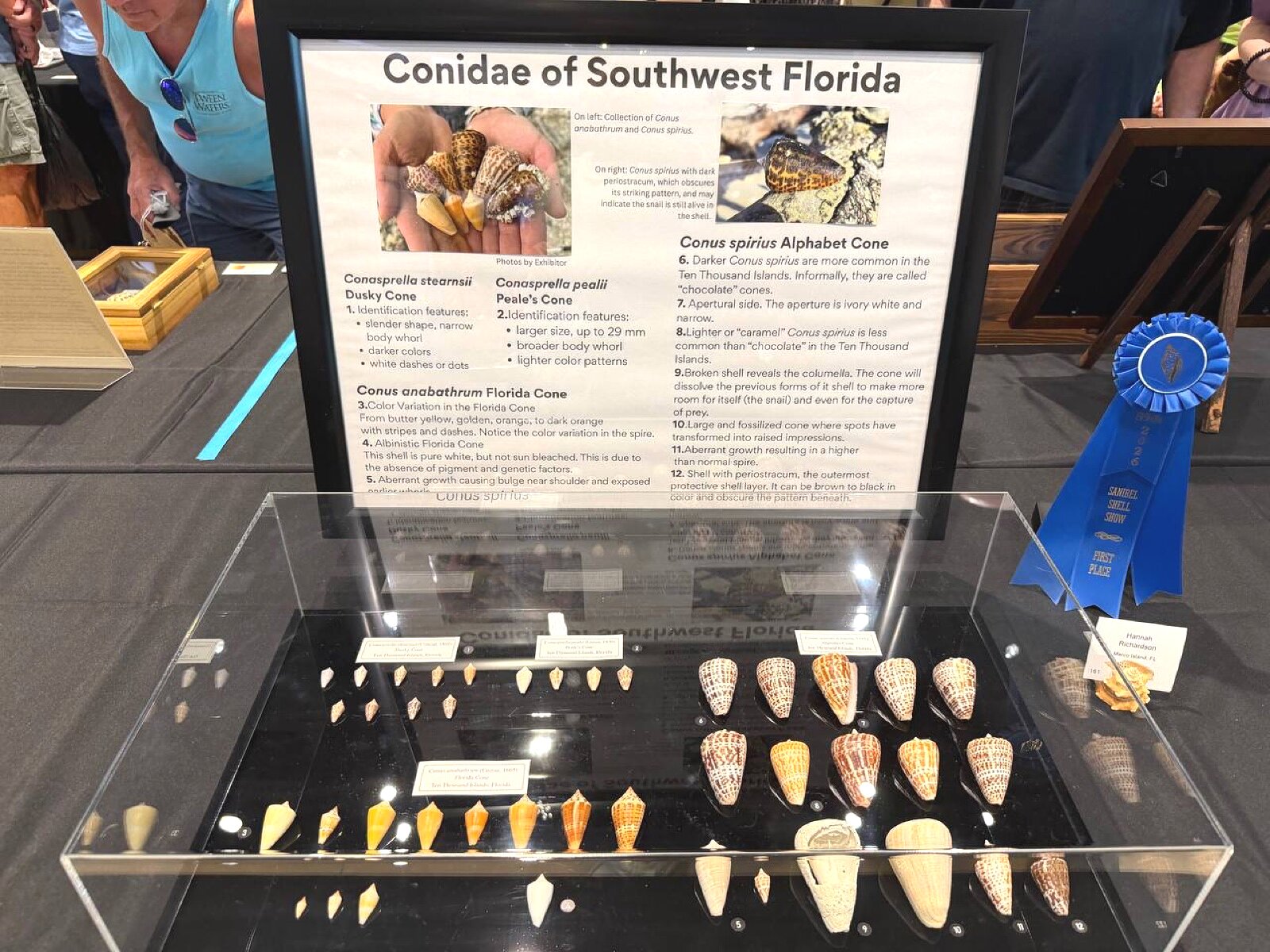
The Conidae of Southwest Florida exhibit earned a blue ribbon — a deep dive into the cone shells native to our waters. Dusky Cones, Peale's Cones, Florida Cones, and Alphabet Cones, all meticulously labeled with identification features and color variation guides. Did you know the Florida Cone ranges from butter yellow to dark orange depending on location?
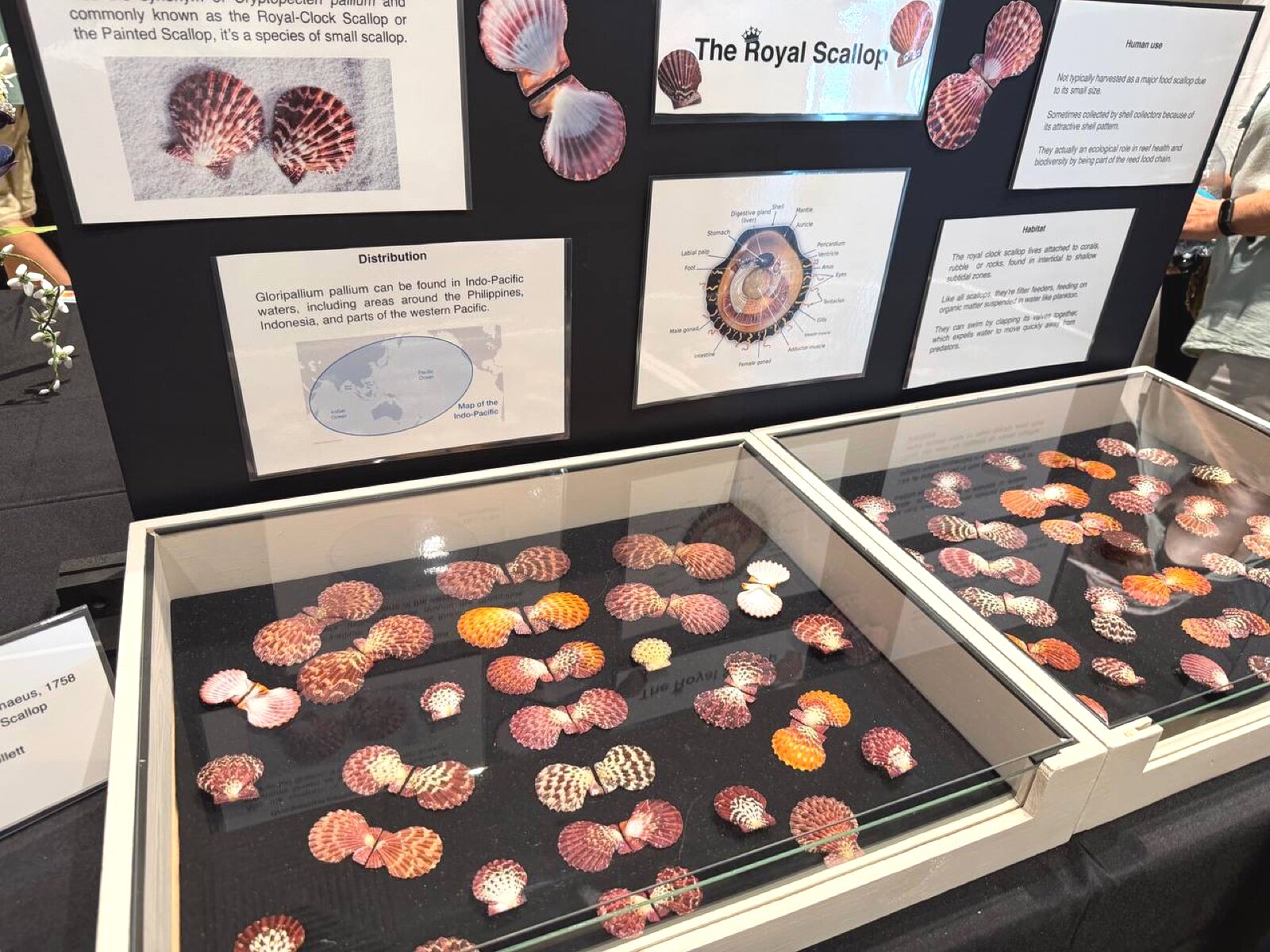
The Royal Scallop exhibit was pure color: dozens of Gloripallium pallium in every shade of red, orange, pink, and purple, alongside distribution maps and anatomical diagrams. These Indo-Pacific scallops are so vibrant they look painted.
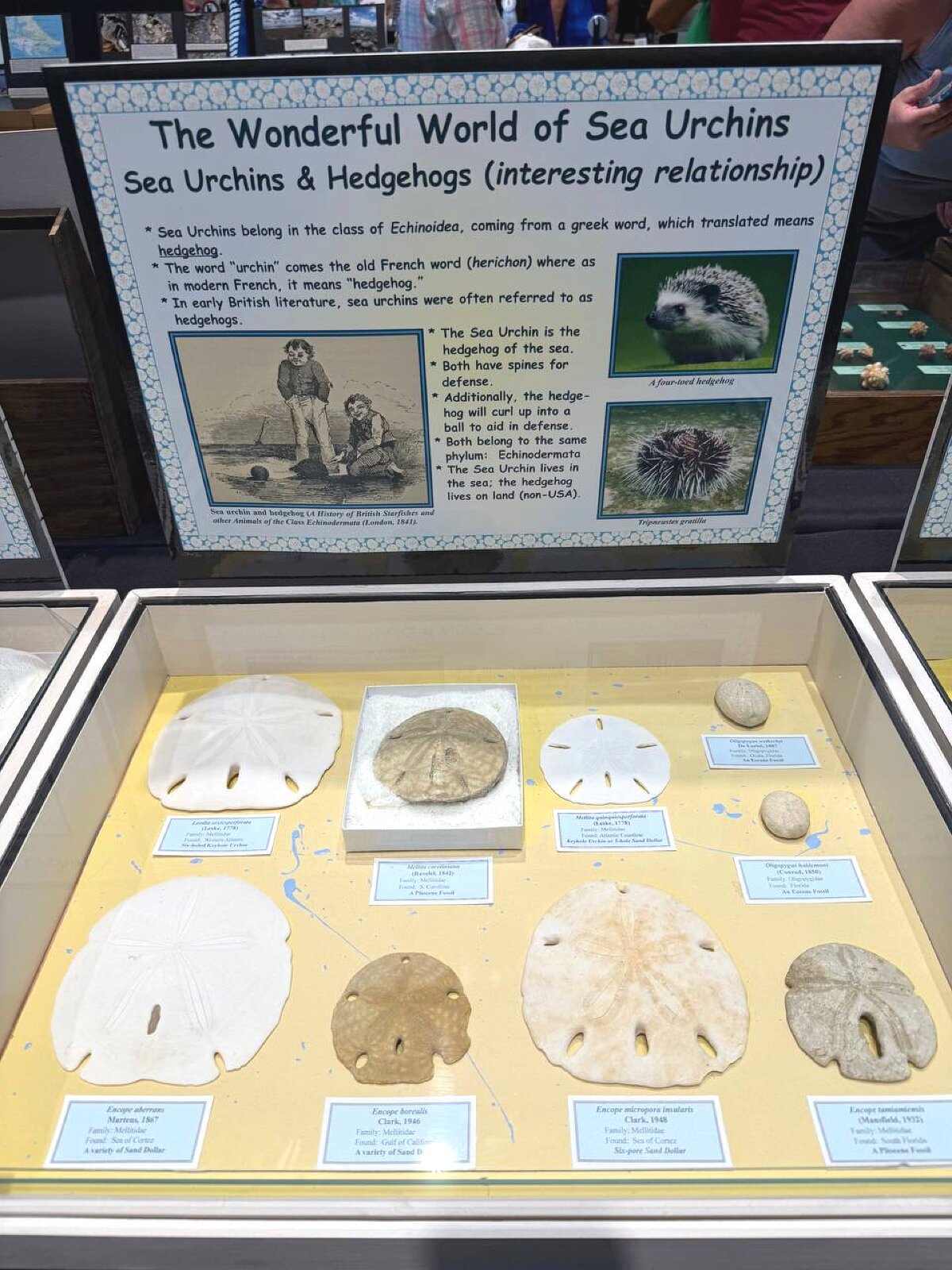
One standout: "The Wonderful World of Sea Urchins" — an exhibit comparing sea urchins to hedgehogs (they share the same Greek root word, Echinoidea). The display featured sand dollars, fossilized urchins, and a side-by-side comparison that made you see these creatures completely differently.
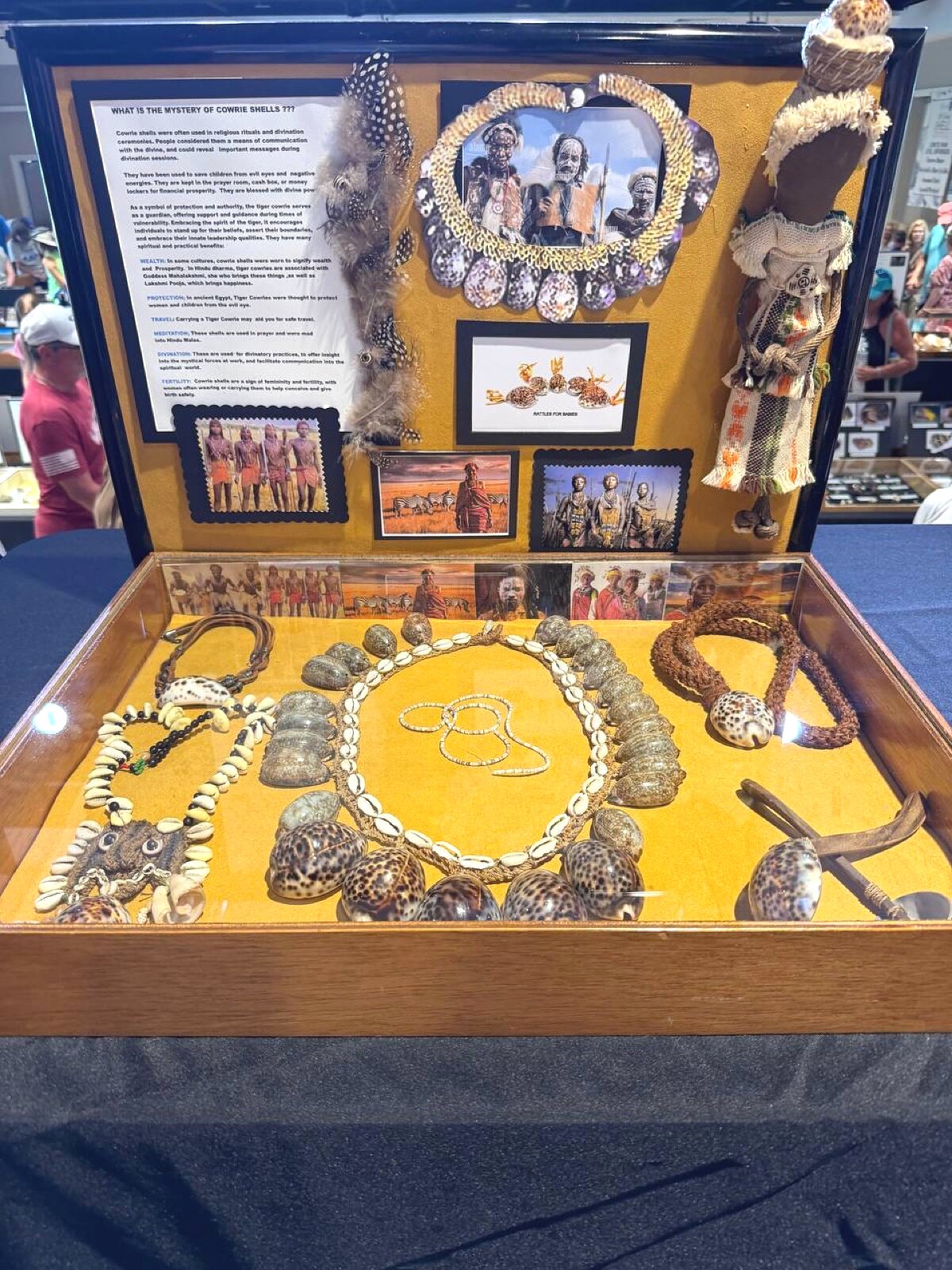
Another: "What Is the Mystery of Cowrie Shells?" — a cultural exhibit exploring how cowrie shells have been used in African rituals, jewelry, and currency for centuries. Tiger cowries as symbols of protection, wealth, and fertility. Shells as spiritual objects, not just beach finds.
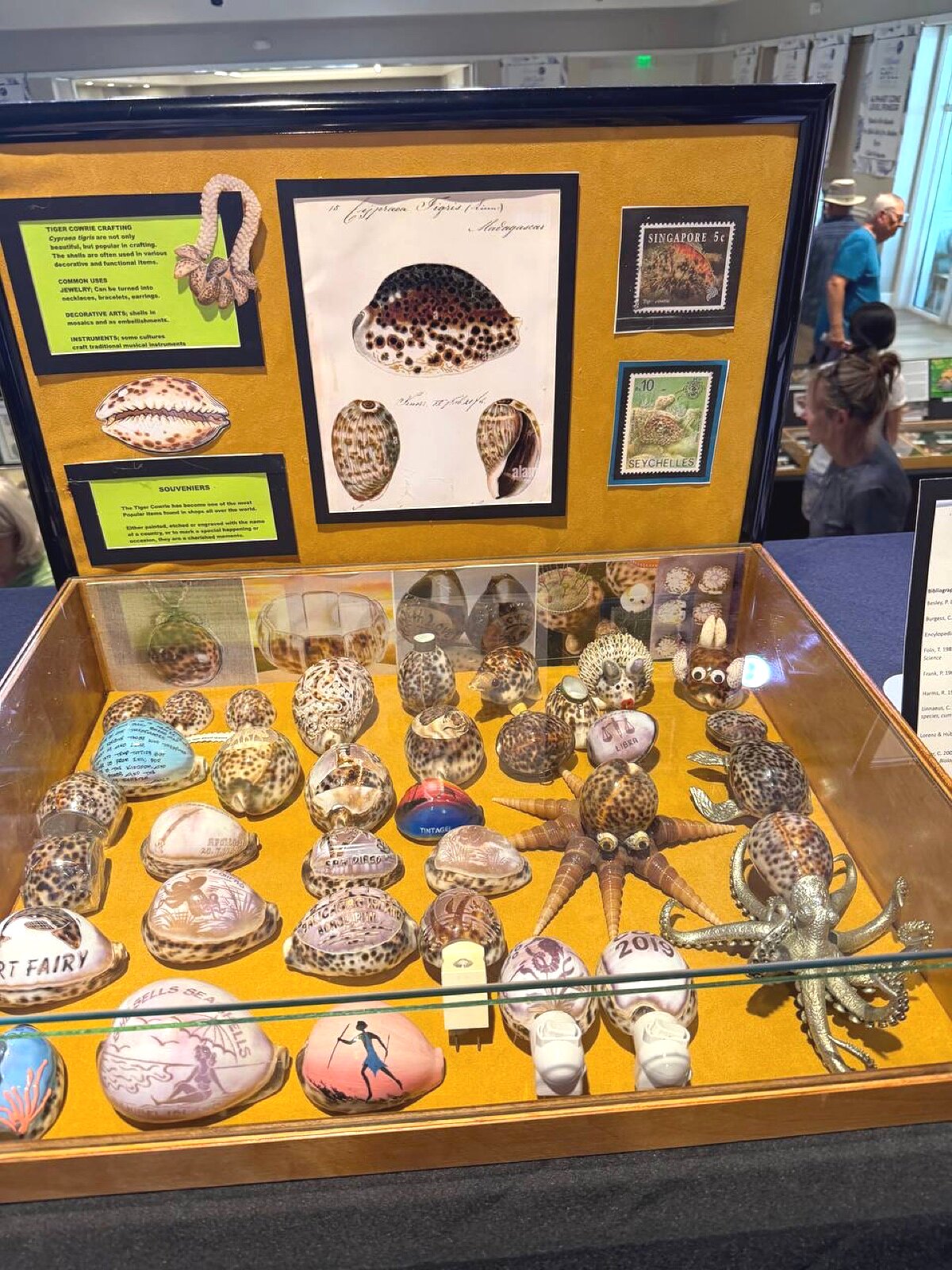
Next to it, a companion exhibit showed tiger cowrie crafting — the shells turned into painted souvenirs, featured on international postage stamps, and used in decorative art worldwide.
Shell Art — Flowers Made of Shells
The art category is where the Shell Show goes from impressive to jaw-dropping. These aren't crafts — they're gallery-quality works made entirely from shells.
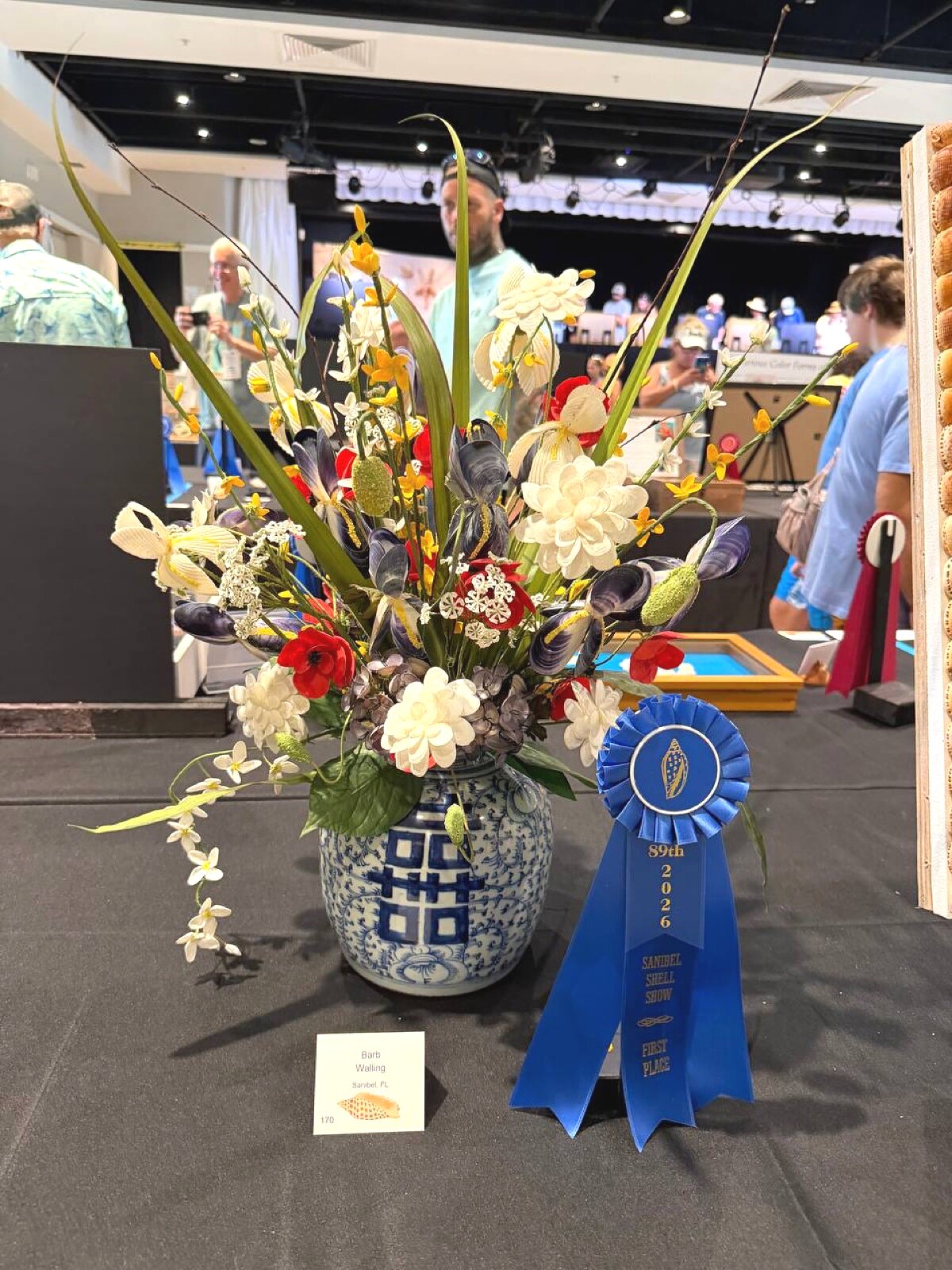
Barb Walling from Sanibel, FL took first place with a stunning floral arrangement in a blue-and-white vase — every single "flower" is made from shells. Mussel shell petals, tiny spiral shell centers, even the leaves and stems are shell-based. From across the room, it looks like a real flower arrangement.
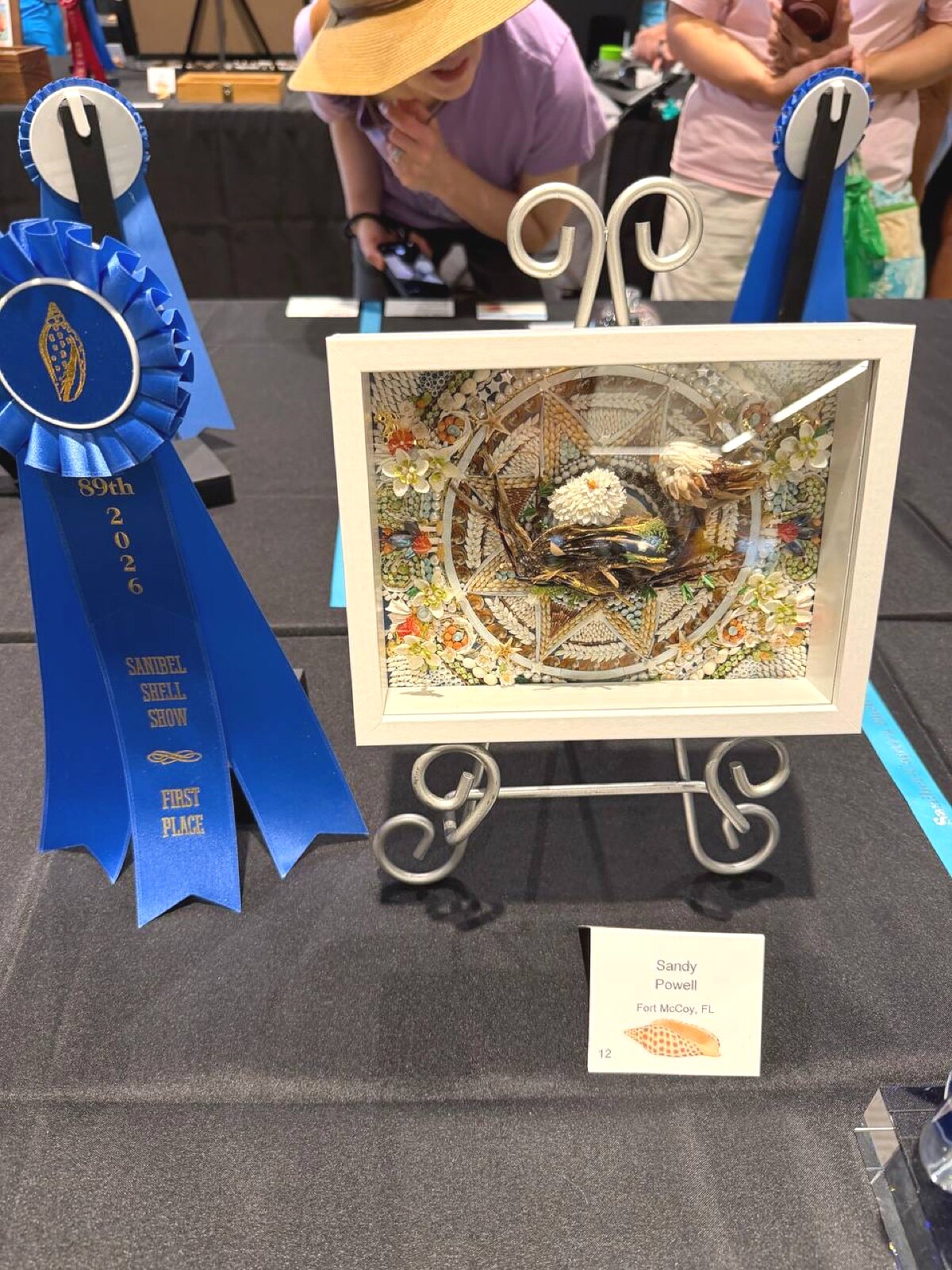
Sandy Powell from Fort McCoy, FL earned first place in another category with an incredibly detailed shadow box — a bird scene with shell flowers, feathers, and foliage, all constructed from tiny shells and shell fragments.
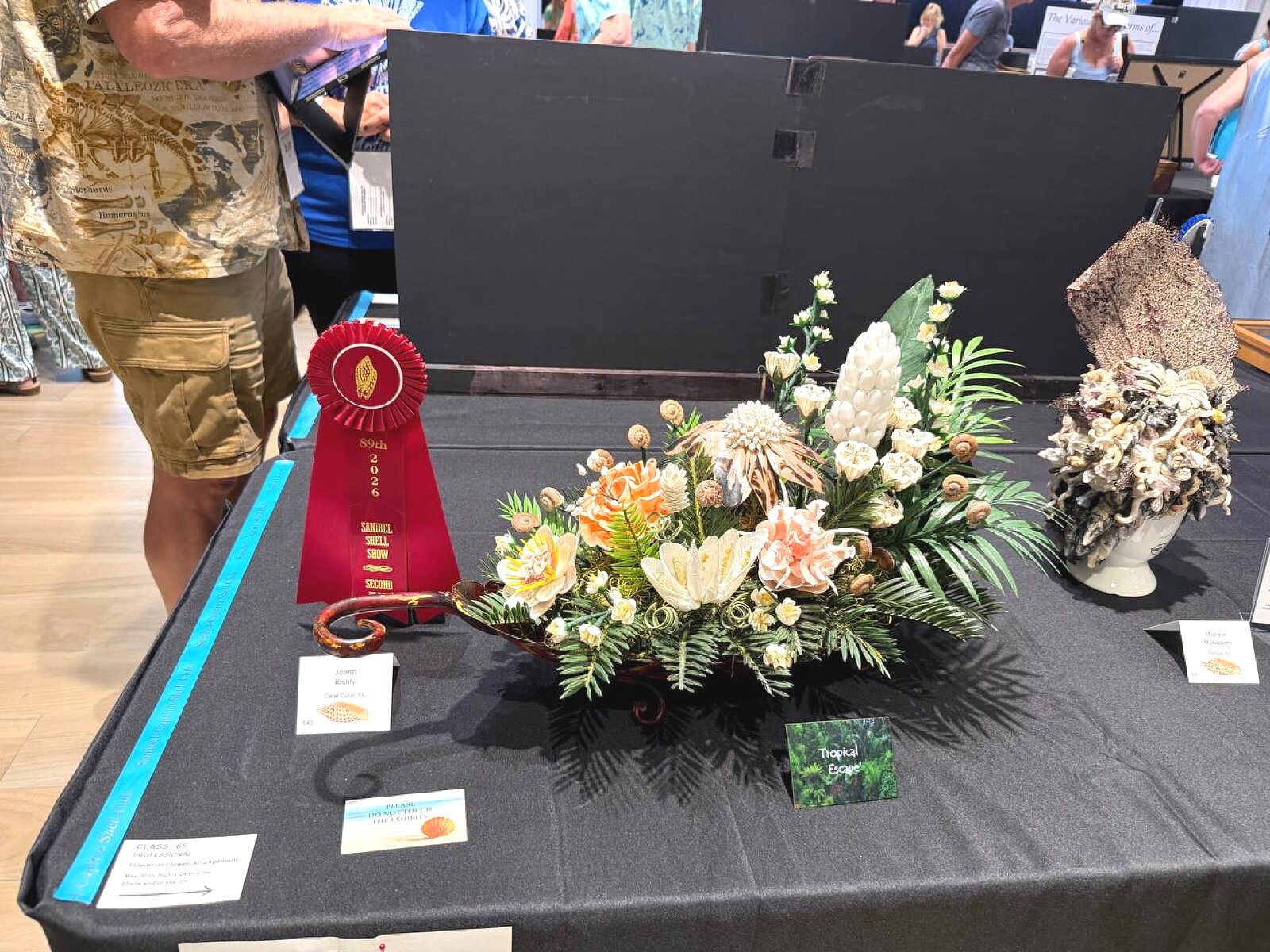
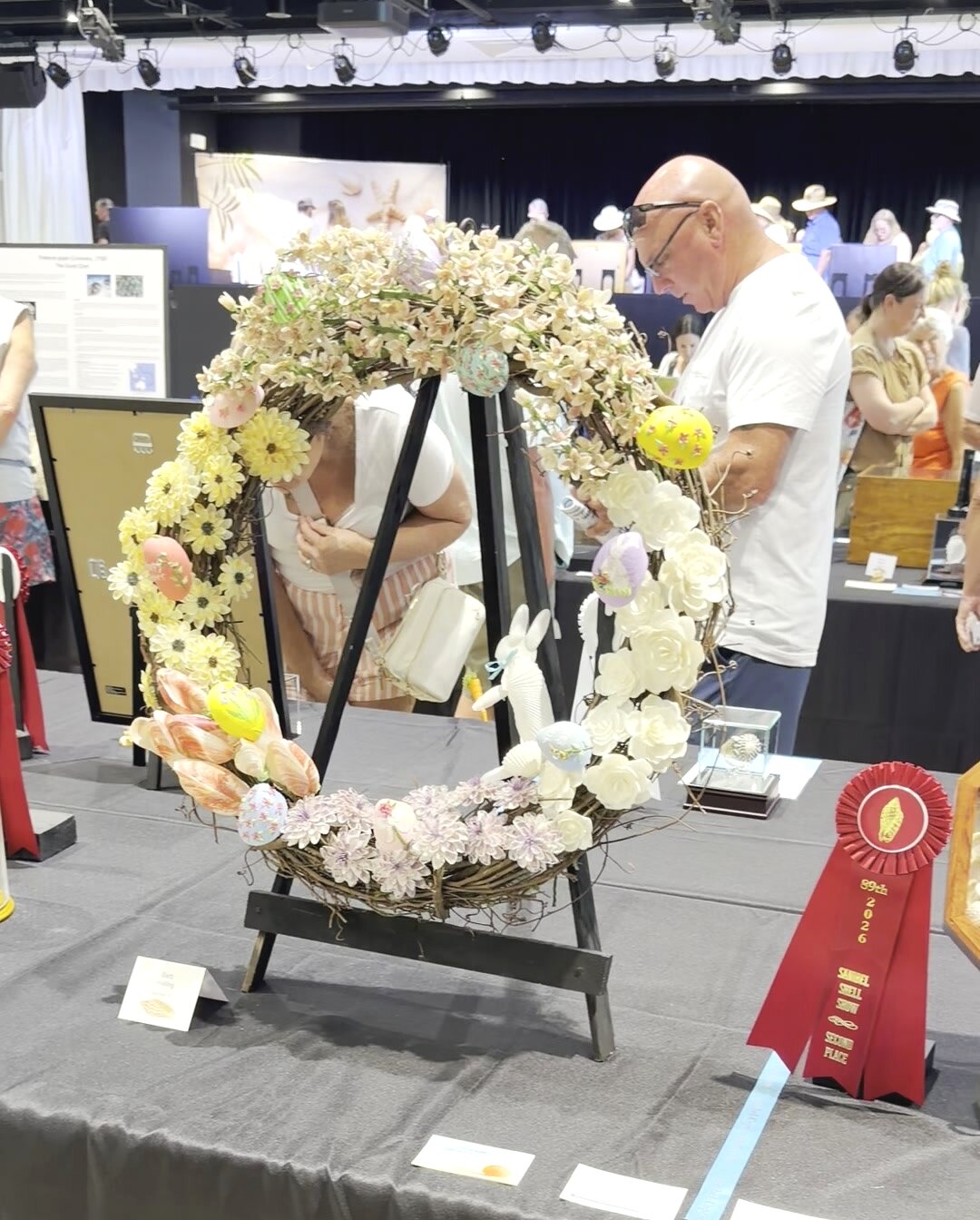
The second-place "Tropical Escape" by Joann Kashfy from Cape Coral was equally stunning — tropical flowers and palm fronds, all made from shells, arranged in an iron stand.
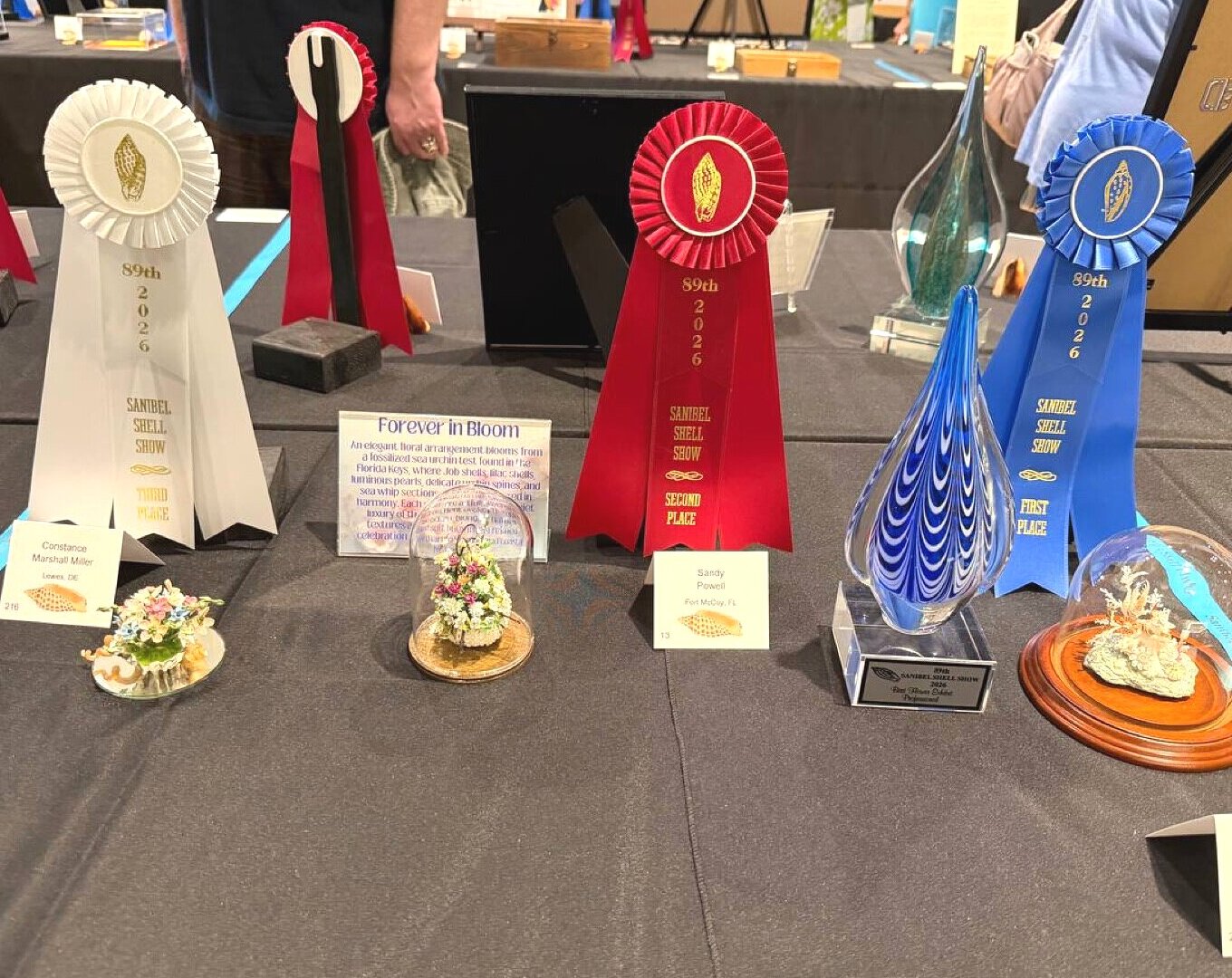
The winners' display table told the full story — first, second, and third place side by side, with trophies, ribbons, and art pieces. The level of craftsmanship across all three was staggering.
Hurricane Ian's Legacy
Several exhibits this year had a direct connection to Hurricane Ian — the Category 4 storm that devastated Sanibel in September 2022.
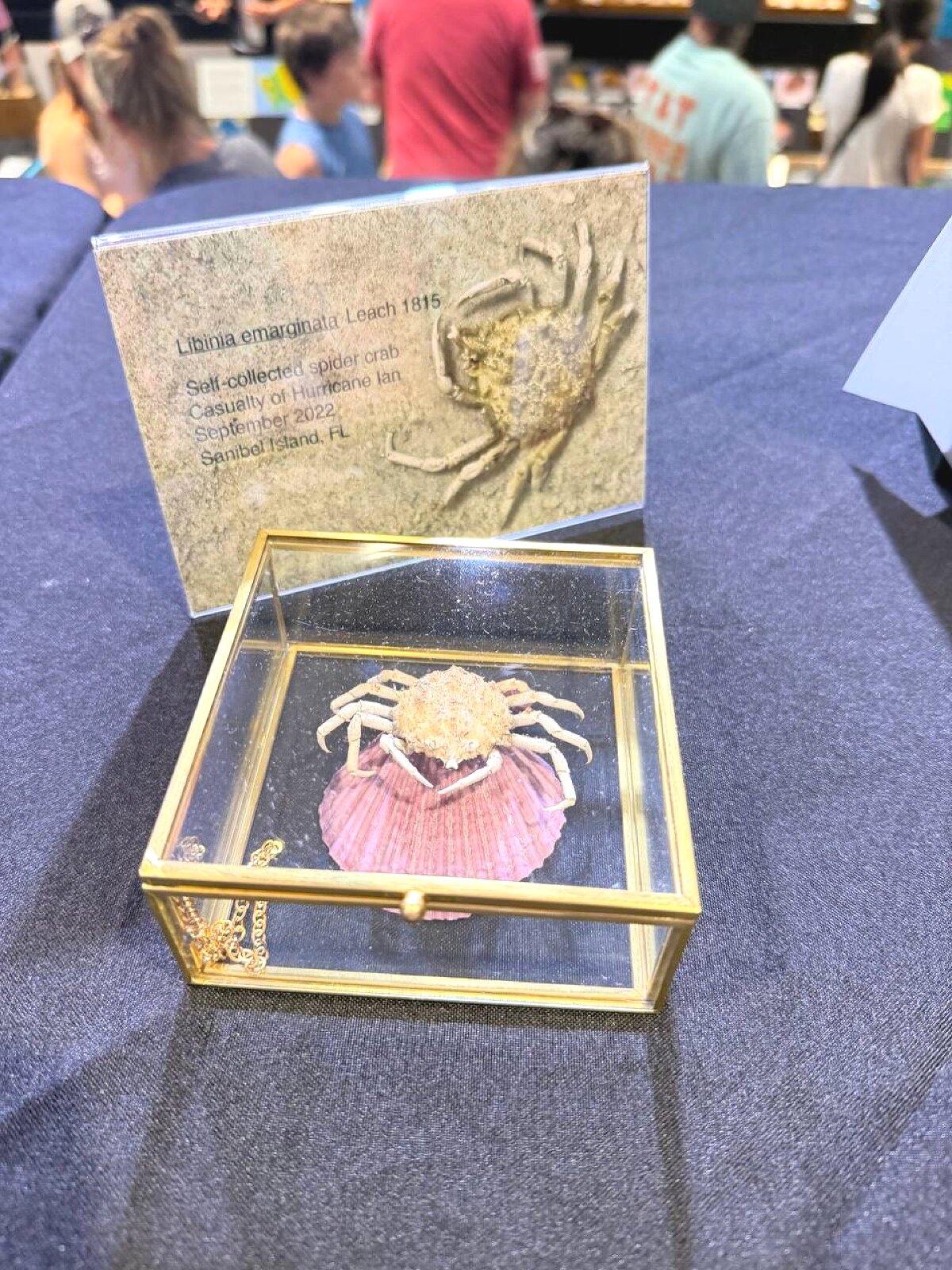
One of the most moving was small and quiet: a spider crab (Libinia emarginata) preserved in a brass-and-glass case, sitting on a pink scallop shell. The label read: "Self-collected spider crab. Casualty of Hurricane Ian. September 2022. Sanibel Island, FL."
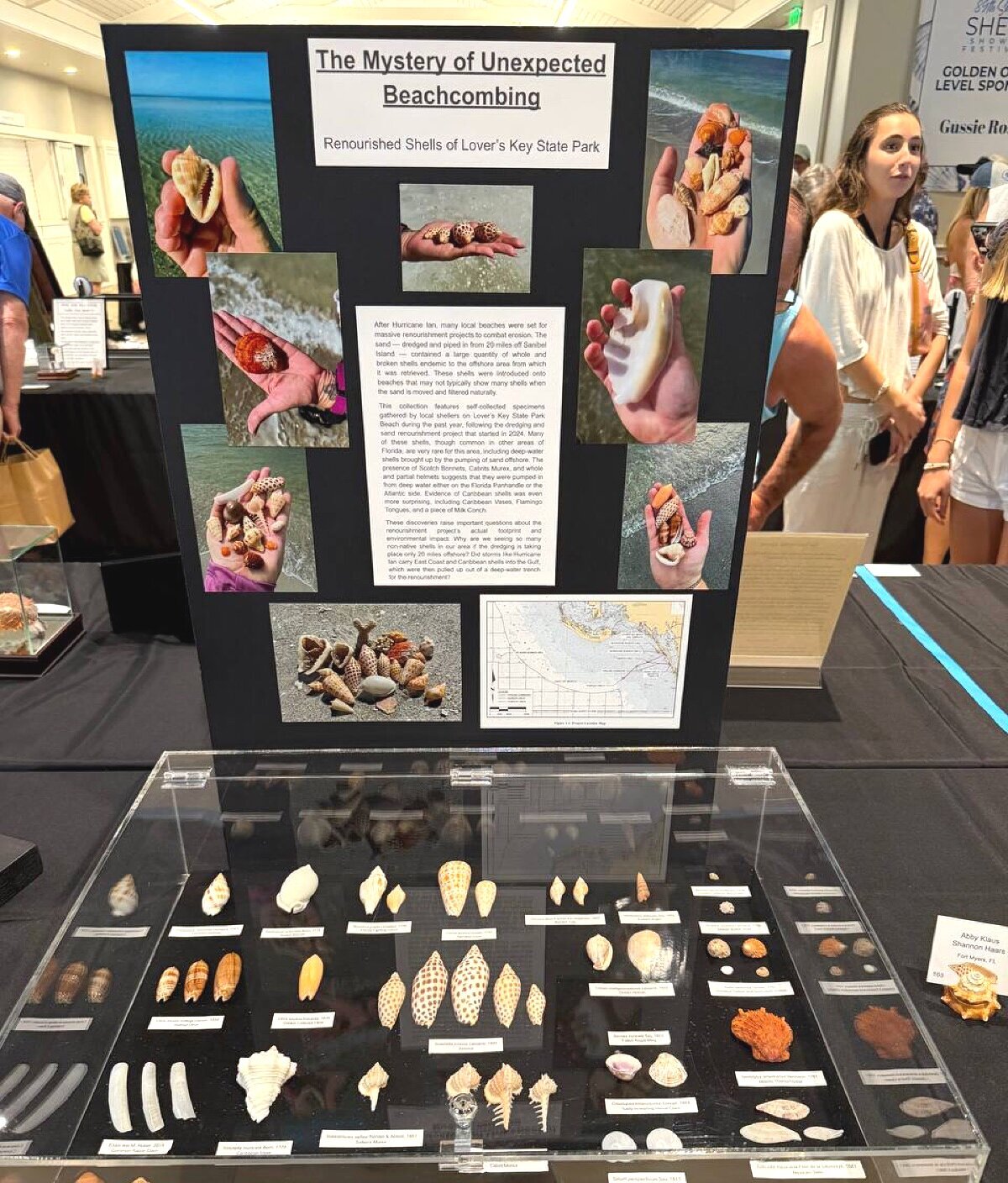
The largest Ian-related exhibit was "The Mystery of Unexpected Beachcombing" — a full display board documenting how the post-Ian beach renourishment projects brought unusual shells to Lover's Key State Park. Sand dredged from 20 miles offshore contained deep-water shells, Caribbean species, and specimens rarely seen on Southwest Florida beaches. Scotch Bonnets, Calico Scallops, whole and partial helmets — shells that Hurricane Ian may have knocked into the Gulf's deep-water trenches, only to be pumped back onto beaches during renourishment.
Three and a half years later, the island is still finding ways to turn loss into discovery.
Walking the Show Floor
The Festival Grounds
The Shell Show isn't just the indoor exhibits. Outside the Community House, there are vendor tents selling shells, jewelry, shell-related art, and local crafts. Food trucks line the parking area. It's a full community event — families, kids, snowbirds, and locals all mixed together.
History: 88 Years and Counting
The first Sanibel Shell Show was held in 1937, making it one of the oldest continuously running shell shows in the United States. It was started by a small group of island residents who wanted to celebrate what makes Sanibel unique — its extraordinary shell diversity.
Sanibel's east-west orientation acts like a natural scoop, catching shells from the Gulf of Mexico that other north-south barrier islands miss — the same geography we break down in our ultimate shelling guide. That geography made the island famous for shelling long before the causeway was built in 1963 — and the Shell Show became the annual celebration of that reputation.
Over the decades, the show grew from a local gathering into an internationally recognized event. Today, exhibitors come from across the U.S. and beyond, and the Sanibel-Captiva Shell Club has become one of the most respected shell clubs in the country.
Planning for Next Year
The Shell Show typically runs for three days in early-to-mid March. Here's what you need to know:
When
Usually the first or second week of March. The 2026 show ran March 6–8. Check the Sanibel Community House website for next year's exact dates, and keep an eye on our broader shelling page if shelling is the main reason you're coming.
Where
Sanibel Community House 2173 Periwinkle Way, Sanibel, FL 33957
It's right on the main road — you can't miss it. Parking is available on-site and along Periwinkle Way.
Admission
A small donation is requested at the door (typically $5). All proceeds support the Sanibel-Captiva Shell Club's educational programs and conservation efforts.
Tips for First-Timers
- Go early. The first day is the least crowded. By the final day, the parking lot is packed.
- Talk to the exhibitors. These people are passionate. Ask them about their collections — they love sharing the stories behind their shells.
- Bring a camera. The displays are photogenic, and the lighting inside the Community House is surprisingly good.
- Visit the outdoor vendors. The tents outside have beautiful shell art and jewelry at reasonable prices.
- Combine it with a Sanibel day trip. Hit the Shell Show in the morning, grab lunch at Doc Ford's or the Lazy Flamingo, then spend the afternoon shelling at Bowman's Beach. Our beach guide can help you compare Bowman's with the other public access points before you go. Perfect day.
Why It Matters
In a world of chain restaurants and generic beach towns, the Shell Show is a reminder of what makes Sanibel Sanibel. It's a community event that's been running longer than most people on the island have been alive. It connects the island's natural gifts — those billions of shells — with the people who study them, collect them, and turn them into art.
If you're planning a trip to Sanibel next March, build your dates around the Shell Show. You won't regret it.
Want to plan the rest of the trip? Start with the ultimate shelling guide, Sanibel beaches guide, and things to do guide. Follow us on Instagram and Facebook for daily island updates.