Updated August 9, 2026: We refreshed this shelling guide with stronger links to current beach, tide, and event planning pages. Shelling conditions change with tides, wind, and storms, so check live conditions before choosing a beach.
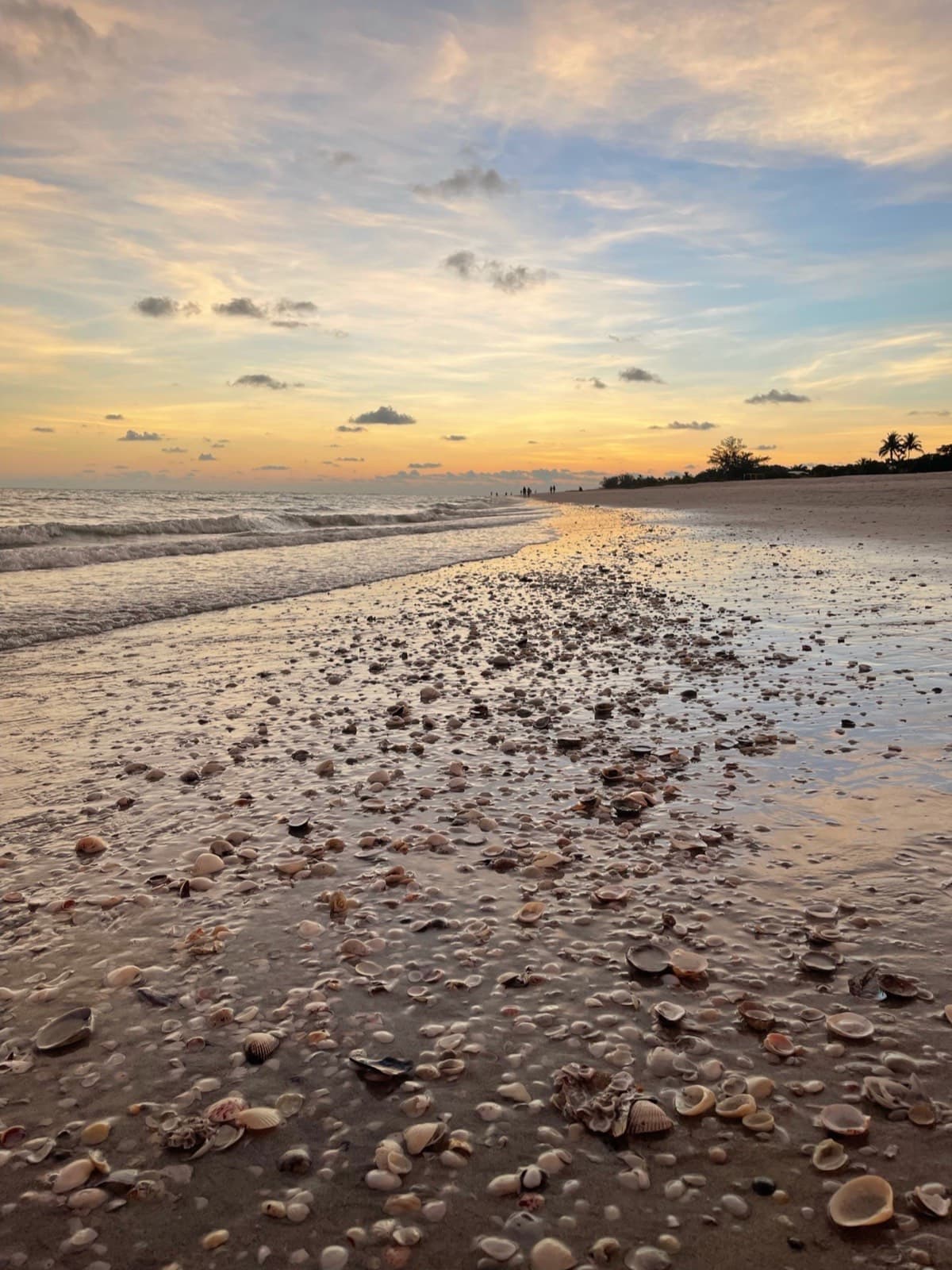
Sanibel Island is the shelling capital of North America, and it is not even close. The island's unique geography — an east-west orientation that acts like a giant scoop in the Gulf of Mexico — catches shells that other barrier islands miss. Shells wash in from the continental shelf and pile up on Sanibel's beaches in quantities you have to see to believe.
People plan entire vacations around shelling here. It is that good — and our best time to visit Sanibel guide can help you line up those peak shelling months.
Why Sanibel Is Different
Most barrier islands run north-south along the coast. Sanibel juts out east-west into the Gulf. This orientation, combined with a gentle, gradually sloping continental shelf, creates a natural funnel that catches shells from hundreds of miles of open water and deposits them on the beaches.
The result: more species, more quantity, and more variety than virtually any other beach in the Western Hemisphere.
The Sanibel Stoop
Within five minutes on the beach, you will notice it — every single person is bent over at the waist, scanning the sand. This signature pose has its own name: The Sanibel Stoop. You will be doing it too. It is unavoidable.
When to Go
Best Season
Winter (December through March) is peak shelling season. Cold fronts push through and churn up shells from the Gulf floor, depositing fresh loads on the beaches. January and February are the prime months.
Best Tides
Low tide is everything. Check the current tide and weather conditions and plan to arrive about an hour before low tide. As the water recedes, it exposes fresh shells that were underwater minutes earlier. The lower the tide, the better the shelling.
Best Time of Day
Early morning, first light. You get the lowest competition, the coolest temperatures, and the best chance at shells that washed in overnight. Serious shellers set alarms.
Best Conditions
The morning after a strong cold front or storm is shelling gold. The rough water dislodges shells from the ocean floor and pushes them to shore. If you see a weather system passing through, plan your beach trip for the next morning.
Where to Shell
Bowman's Beach
Consistently the best shelling on the island. If you're new to Sanibel altogether, our first-time visitor guide explains what makes Bowman's different from the other beaches, and the beach guide helps compare parking and amenities. Fewer visitors (the parking lot is a short walk from the beach), more shells, and a wider beach. The northwest-facing shoreline catches shells perfectly. This is where the serious shellers go.
Blind Pass
Where Sanibel meets Captiva, the tidal pass creates strong currents that deposit huge quantities of shells. The sandbar area near the pass is particularly productive. Warning: the currents here are strong — wade carefully.
Lighthouse Beach
The eastern tip of the island catches shells washing through San Carlos Bay. It's also one of the key stops in our broader Sanibel beach guide. Good variety, and the rocky areas near the pier hold different species than the sandy beaches. Also the closest beach to the causeway.
Tarpon Bay Road Beach
A less-crowded alternative with good shelling, especially after storms. The beach access is easy and the parking is usually available.
Causeway Islands
Often overlooked, the small beaches along the causeway islands can produce surprising finds, especially on the bay side.
What to Look For
Common Shells (You Will Find These)
- Lightning Whelk — Sanibel's signature shell. Left-handed spiral, beautiful brown and white patterns. The official state shell of Florida was modeled after this species.
- Fighting Conch — Orange and pink interior, sturdy shell. Very common on Sanibel.
- Calico Scallop — Colorful fan-shaped shells in reds, oranges, and purples.
- Cockle Shells — Heart-shaped when viewed from the side. Several species found here.
- Olive Shells — Smooth, glossy, elongated. Beautiful in a collection.
- Murex — Spiny and ornate. Several species, some quite large.
- Tulip Shells — Elegant, elongated spirals with distinctive markings.
Rare Finds (The Holy Grails)
- Junonia — The rarest find on Sanibel. A cream-colored shell with brown spots. Finding one is such a big deal that the local newspaper, the Island Reporter, publishes photos of junonia finders. Some people shell for decades without finding one.
- Scotch Bonnet — Uncommon and beautiful with a checkered pattern.
- Lion's Paw — A large, knobby scallop shell. Finding a complete one in good condition is rare.
- Alphabet Cone — Small cone-shaped shell with markings that look like letters.
- Angel Wing — Delicate, paper-thin bivalve. Finding a complete pair is extremely rare.
The Rules
Live Shelling Is Prohibited
This is the most important rule on Sanibel: you may only collect empty shells. If a shell has a living creature inside it — a snail, a hermit crab, anything — it stays on the beach. This law is enforced, and fines are real.
How to tell: hold the shell opening down and wait a moment. If anything moves, put it back. If in doubt, leave it.
Respect the Ecosystem
- Do not take sand dollars that are still alive (they are dark purple/brown when living, white when dead)
- Do not take starfish
- Be mindful of how many shells you take — leave some for the next person and for the ecosystem
- Fill in any holes you dig
What to Bring
- Mesh bag or bucket — mesh bags let water and sand drain as you walk
- Water shoes — broken shell fragments are sharp. Do not shell barefoot.
- Sunscreen and a hat — you will be out longer than you planned
- A scoop or sifter — some shellers use a small sand sifter to find tiny shells
- Shell identification guide — the Bailey-Matthews National Shell Museum on Sanibel sells excellent pocket guides
- Zip-lock bags — for separating delicate finds
The Shell Museum
The Bailey-Matthews National Shell Museum on Sanibel is the only museum in North America devoted entirely to shells and mollusks. It is worth a visit before or after your shelling excursion — the exhibits will help you identify and appreciate what you find on the beach. They also offer guided beach walks led by marine biologists, and the annual Sanibel Shell Show is the island's deeper dive into shell collecting culture.
📍 3075 Sanibel-Captiva Road 🕐 Open daily, 10 AM - 5 PM
Pro Tips
- Shell the outgoing tide. As water recedes, it reveals fresh shells in the wet sand. Walk the waterline and stay just ahead of the retreating waves.
- Check the wrack line. The line of seaweed and debris left by high tide often hides shells. Gently move the seaweed aside.
- Look in the shallow water. Wade in ankle-deep and look down. Many of the best shells are just below the surface, not on dry sand.
- Go after a storm. The rougher the water, the more shells it brings in. The morning after a cold front is shelling heaven.
- Try the bay side. Most visitors only shell the Gulf beaches. The bay side of the island (especially near the lighthouse) produces different species.
- Bring a headlamp for early starts. If you are hitting the beach before sunrise, a red-light headlamp helps you spot shells without disturbing wildlife.
Shelling on Sanibel is not just a beach activity — it is the island's identity. The Sanibel Shell Show, the Shell Museum, the Sanibel Stoop — the entire culture revolves around these tiny treasures from the Gulf. For the day-of decision, start with the Sanibel shelling page and its beach picker, then take your time, enjoy the hunt, and remember: the best shell is always the next one.